
Selene Gaiani – Project Manager
As the rainy season comes to an end, Penida is once again basking in sunshine. While we experienced a few unexpected rainy nights, the overall shift in weather has brought renewed energy to the project and to the team. With brighter days ahead, we’re excited to share the latest updates and achievements from the past three months.
One of the biggest milestones this quarter is the grand opening of the Dive Hub in May. This new space marks a transformative step for our operations in Penida. It serves not only as our dive center but also as the new home for our interns. Located within the same space as the Indo Ocean Project Head Office, the Dive Hub brings our interns into closer and more direct contact with the science team, enhancing collaboration and creating a stronger learning environment. We’re confident that this integration will bring immense benefits to both the interns and the project as a whole. Along with the new Dive Hub, intern accommodations have shifted to Wehus, a convenient location just a few minutes’ walk away, ensuring comfort and ease of access to daily activities


In addition to this exciting new chapter, we’re proud to introduce Calyptotheca, our newest boat. She will support our fieldwork, and daily activities, also hosting guests, strengthening our capacity to operate efficiently and explore more of our surrounding waters.
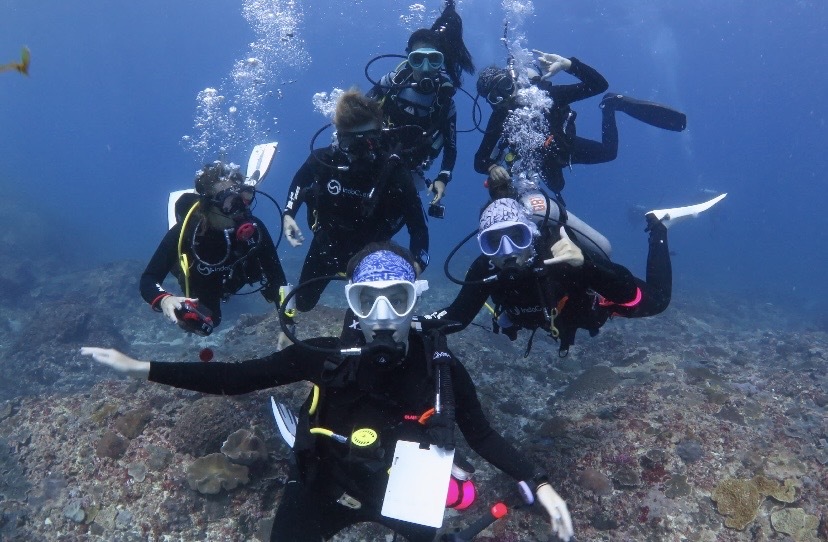
This quarter, we also had the pleasure of watching another group of talented divers complete their journey with us. We extend our heartfelt congratulations to Kayley Head, Arthur Deviaene, Molly Evans, Rayne Seip, Lena Hillringhaus, Alexia Backler, Ido Salomon, Divo Ario, Eilidh Richmond, Fischer Brown, Shamira Nurifitri Rahmadani, and Pauline Fehrmann. These passionate graduates came from around the world, united by a shared love for the ocean and an inspiring thirst for knowledge. Their presence has enriched our community and left a lasting impression on the Penida project.
We also have some exciting staff news to share. Divo, after completing his internship and research on Crystal Bay, will officially join the Raja Ampat project as Project Coordinator and Marine Biologist.
Gita, after her training period in the Bira project, has joined the Penida Head Office team as Senior Marine Biologist and Research Associate.
And Shamira, after completing her Divemaster and research internship in Penida, is now working in Raja as a Junior Marine Biologist.
Watching our interns transition into staff roles and continue growing within the Indo Ocean Project family is incredibly rewarding. We are proud of their achievements and confident they will thrive in these new adventures.

To all of our graduates, staff, and interns: thank you for making this last quarter such a dynamic and fulfilling one. Your dedication and passion are what drive this project forward. We look ahead to the coming months with optimism, ready to dive into new challenges and continue our shared mission of marine conservation and research.
Kristova Yubilius – Jr. Marine Biologist
Dive Hub: The Future of Penida Science
The future of Penida Science has never looked brighter! With the successful transition of IOP Penida to our own dedicated facilities, the Dive Hub, we look forward to achieving our science target with ease and efficiency like never before. A core vision behind establishing our own facility and boat, Calitotheca – proudly named after a bryozoan species discovered and classified by our Science Director, Pascal Sebastian – was to gain autonomy over our dive site choices. No longer will our dive site choices be influenced by others; now we have the freedom to prioritise our science and invaluable internship program above all else. This pivotal shift undoubtedly streamlined our data collection efforts, leading to more robust and frequent fish surveys, benthic surveys, and BRUV deployment.


What about our house reef Crystal Bay you might ask, will we abandon our hard work there? Rest assured our dedication to Crystal Bay is stronger than ever! Now that we can consistently meet our science target, we can head to Crystal Bay more often. This means more coral maintenance and more ambitious projects to restore our beloved Crystal Bay. The journey to revitalise Crystal Bay has just begun, and we have exciting plans and dedicated work in progress. Please look forwards for updates on our restoration sites.
Having our own boat also unlocks immense possibilities to extend our established dive sites. Previously inaccessible dive sites can now be added into our itinerary, and we might even add them into our expanding scientific agenda. Moreover, there are possibilities to discover uncharted dive sites which will significantly deepen our understanding of Nusa Penida as a Marine Protected Area.
New Partnership: Turtle Conservation Bulih Bali Nusa Penida
March also marked a significant milestone; we established a partnership with locally owned turtle conservation project located in Banjar Nyuh. The project is dedicated to safeguarding the future of sea turtles around the Nusa Penida waters. From relocating vulnerable nest to safer area, releasing hatchlings back to the ocean, and taking care of accidental turtle bycatch from local fishermen.
Their dedication and efforts have bare fruits from the successful hatchings of hawksbill (Eretmochelys imbricata) and olive ridley’s turtle (Lepidochelys olivaceae) sourced from Gamat Bay, one of the popular dive sites in Penida. They have also been entrusted with multiple hawksbill and green sea turtle (Chelonia mydas) rescued from fishermen’s accidental bycatch. We are optimistic about this partnership, aiming to support their ethical and sustainable practices, and to empower them to educate the local Penida communities on the importance of turtles and promoting a responsible code of conduct for tourists.

Marina Lee – Program Coordanitor
Science and Biodiversity Report
As we transition out of the low season, the changing conditions in Penida are bringing cooler waters and with them, an abundance of incredible sightings, especially for our shark enthusiasts!
One of the most exciting highlights this quarter was the sighting of a rare female great white shark (Carcharodon carcharias) at Pura Ped, documented by Scuba Junkie Penida. This marks the first recorded sighting of the species in Nusa Penida since 2019!
In addition to this thrilling encounter, dive sites in northern Nusa Penida have been offering us unforgettable moments with pelagic thresher sharks (Alopias pelagicus), whale sharks (Rhincodon typus), whitetip reef sharks (Triaenodon obesus), and scalloped hammerheads (Sphyrna lewini). Interns and staff have also reported frequent encounters with common bottlenose dolphins (Tursiops truncatus), big mangrove whiprays (Himantura granulate), marbled whiprays (Taeniurops meyeni), and numerous green (Chelonia mydas) and hawksbill turtles (Eretmochelys imbricata).
Southern dive sites have been equally generous, with abundant sightings of reef manta rays (Mobula alfredi) and brown-banded bamboo sharks (Chiloscyllium punctatum), so plentiful, in fact, that our interns didn’t know where to look first!
With the rainy season coming to an end, the last three months have flown by. Nightly thunderstorms have mostly subsided, and sunshine now dominates our days. Thicker wetsuits are coming out as we embrace cooler dives.
Despite occasional weather challenges, we met our science targets this quarter. Over the past three months, we conducted 35 roving surveys, 13 BRUV drops, and 12 benthic surveys around Penida. One benthic survey even featured a surprise photo-bomb from a bumphead mola (Mola alexandrini) right inside our survey frame!
What a fantastic quarter for marine wildlife sightings!


Mangroves Update
Our 700 mangrove propagules are thriving in the nursery! We’ve ensured they’re watered daily, and we’re excited to report they’ve grown large enough for planting. We’re currently planning a new mangrove planting day next quarter, which will include participation from our local Nusa Penida communities. I can’t wait to get these into the mud and maybe spot a few cute critters while we’re at it!
Citizen Science Report
Our dedication to citizen science remains unwavering. We continue to document every lucky encounter and contribute data to our partners. This quarter, we completed 18 citizen science dives and added 11 turtle cheek photos, 15 manta belly photos, and 7 elasmobranch images to our database.
As always, hawksbill turtles (Eretmochelys imbricata) were a common sight, despite being listed as critically endangered by the IUCN. We also enjoyed multiple encounters with brown-banded bamboo sharks (Chiloscyllium punctatum).
As of this quarter, our iNaturalist community has documented over 1,803 species of marine organisms. An amazing milestone worth celebrating!
A huge thank-you to all IOP interns, naturalists, and staff who contributed photos. Your efforts help us better understand these species’ habitats, life cycles, sex ratios, and more, while celebrating the rich biodiversity of Nusa Penida.


Coral Restoration Report
At Crystal Bay, we completed three additional coral restoration dives this quarter, bringing our total number of coral fragments planted to 1,828. We’ve also introduced more metal spiders and built new structures to house recently added Echinopora corals. These installations will serve as permanent homes for our coral fragments, many fish species and little critters and are central to our dream of restoring Crystal Bay’s reef.
In addition, we carried out three CoralWatch surveys and five Dives Against Debris, helping us monitor and protect coral health in the bay.
Want to join the team?
We are always seeking hard working and enthusiastic ocean lovers to join our award-winning and innovative divemaster and research diver internship. Contact us and apply online today!

Recent Comments